College football is inching closer to kickoff, but some of the biggest questions surrounding the sport have nothing to do with preseason depth charts or quarterback battles.
Instead, the conversation continues to center on Capitol Hill, conference boardrooms and the rapidly evolving business of college athletics.
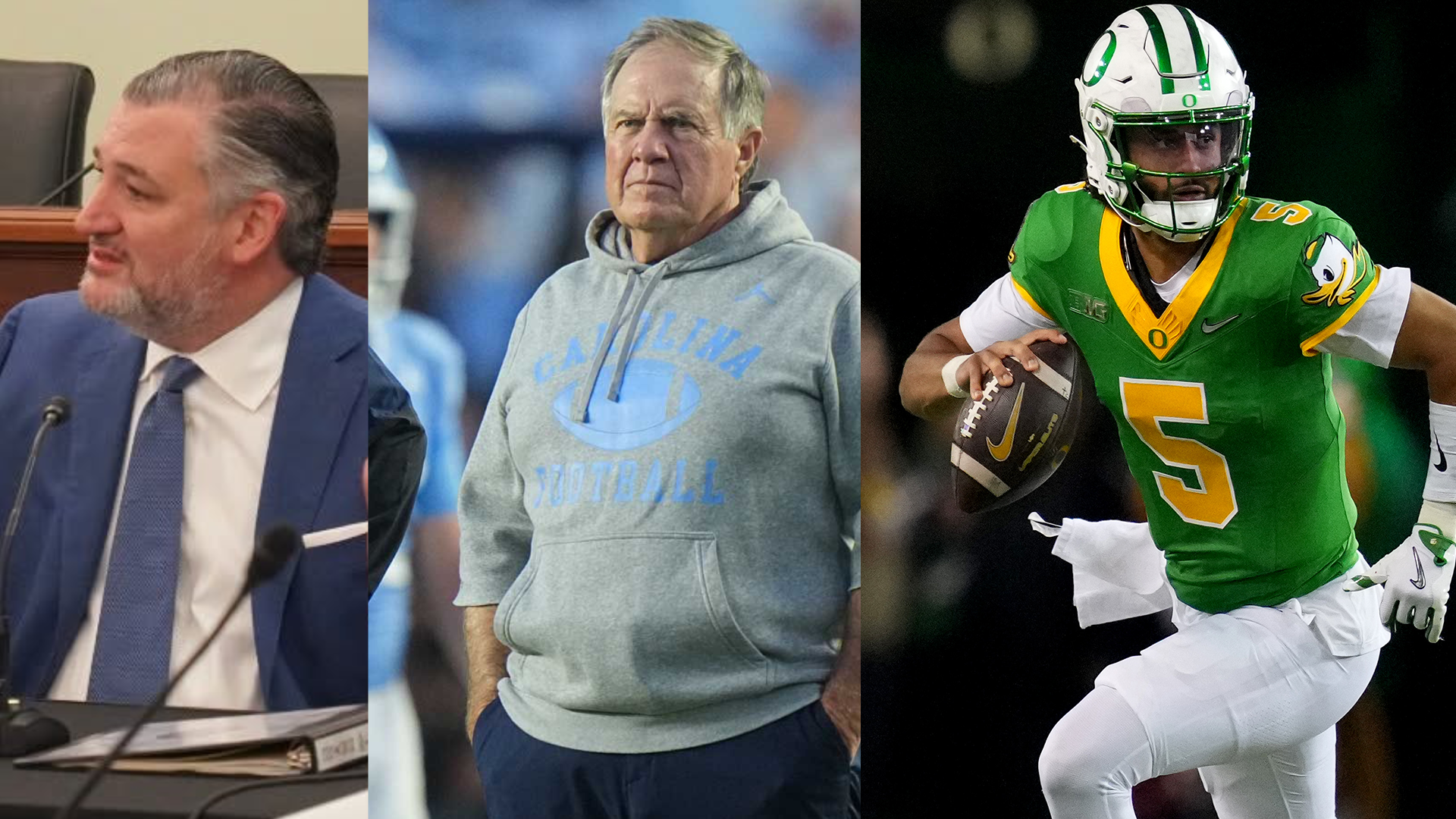
On the latest episode of Game Runs Deep, OutKick Senior National College Football Writer Trey Wallace joined Sudu Upadhyay to discuss the proposed Protect College Sports Act, the growing momentum behind collective bargaining, the latest turmoil surrounding Bill Belichick’s North Carolina program and the biggest storylines entering Big Ten Media Days.
The Protect College Sports Act reaches a critical moment
With Congress preparing to recess in early August, lawmakers are racing to determine whether the Protect College Sports Act can receive a Senate vote before time runs out.
The legislation would provide a framework for regulating revenue sharing, transfer rules and NIL while granting college athletics a level of antitrust protection that would allow a governing body to enforce those rules.
Wallace noted that conference leaders recently reviewed updated revisions to the proposal, including an additional retention pool schools could use to keep current players on their rosters.
This is not the full language of the ‘Protect College Sports Act’, which the Big Ten and SEC are awaiting before any type of comments regarding the matter.
— Trey Wallace (@TreyWallace) July 28, 2026
A draft of the summary was given to conference leaders on Monday.
There is a ‘retention cap’ installed at $20 million pic.twitter.com/QQriCfCvNz
That addition, however, creates another challenge. Programs with the largest budgets would gain another financial advantage, while many schools are already questioning whether they can even afford the existing revenue-sharing model.
“The retention pool” was one of Wallace’s biggest takeaways from the latest revisions because it creates another significant funding hurdle for schools outside college football’s financial elite.
Even if legislation ultimately passes, Wallace cautioned that it will not eliminate lawsuits surrounding transfers, eligibility and player compensation. Instead, it would simply provide the sport with a stronger framework for enforcing rules than currently exists.
Is collective bargaining inevitable?
While Congress debates legislation, another movement may be gaining traction.
Stanford players recently formed the first official chapter of the College Football Players Association, marking the first organized effort of its kind at a major program.
Stanford University has formed the first current player led public chapter of the College Football Players Association. Read our press release: pic.twitter.com/H82OGD8Rs9
— CFBPA (@CFBPAOfficial) July 27, 2026
For Wallace, the move feels less like a one-off story and more like preparation for where college athletics could eventually be headed. As NIL compensation continues to grow and schools negotiate increasingly lucrative player agreements, collective bargaining could ultimately be the only realistic path toward creating enforceable salary structures and player contracts.
North Carolina’s Bill Belichick experiment continues to unravel
One of the offseason’s most surprising developments has been the continued controversy surrounding North Carolina.
General manager Mike Lombardi was placed on paid administrative leave following a human resources complaint, while reports surfaced that the College Sports Commission is also investigating the football program.
The University of North Carolina football team is being investigated by the College Sports Commission — the entity which handles compliance and enforcement of NCAA and NIL rules, per @PabloTorre.
— Pablo Torre Finds Out (@pablofindsout) July 27, 2026
This comes in addition to Mike Lombardi's placement on paid administrative leave. pic.twitter.com/orRNSymHqy
Wallace described the situation bluntly.
“It is the Titanic and it’s heading straight for the iceberg,” he said while discussing the state of the program.
Just one year after Belichick’s arrival with enormous expectations, North Carolina has generated headlines for nearly everything except football.
Wallace questioned whether the investment in Belichick and Lombardi has produced meaningful results, while suggesting the program faces significant pressure to reverse course on the field this season.
Big Ten enters the season with momentum
As Big Ten Media Days begin, Wallace believes the conference has earned its place atop the college football landscape.
Three consecutive national championships, massive television revenue and growing influence in College Football Playoff discussions have given commissioner Tony Petitti and the Big Ten considerable leverage.
“We are confident that the Big Ten is in the strongest position in its history.”
— Big Ten Conference (@bigten) July 28, 2026
Commissioner Petitti kicks off 2026 Big Ten Football Media Days presented by Discover. pic.twitter.com/AuhOKr2Qmm
Wallace pointed to the conference’s financial strength, Ohio State’s massive sponsorship deals and the Big Ten’s role in shaping future playoff conversations as evidence that the league currently sits in a position of power.
The discussion also touched on several programs to watch this season, including:
Whether Lincoln Riley can get USC back into the College Football Playoff conversation, expectations for Oregon, Ohio State, Penn State, and Michigan, UCLA’s future under Bob Chesney, and the conference’s deep collection of experienced quarterbacks heading into 2026.